

The business problem
Disruption is a network problem: 44% of Europe’s average departure delay in 2025 was knock-on delay from earlier flights [1]. Lisbon, on one runway near capacity, was the least punctual of Europe’s 30 busiest airports [2].
A minute of delay at the gate costs an airline about €45 while the delay stays under 30 minutes, and €166 averaged over all delays, knock-on included; passengers’ rebooking, care, compensation and lost future bookings are the largest part [3].
Under Regulation (EC) No 261/2004 (EU261), passengers whose flight arrives three or more hours late or is cancelled at short notice can be owed €250 to €600 each, unless extraordinary circumstances caused it [4].
ARROW’s scenario is a Portuguese airline with a Lisbon hub and 900 flights a day. At 09:45 on its sample day, a hydraulic leak grounds the Airbus A320neo CS-TQA for four hours, and its next four flights must wait or be cancelled. ARROW builds two plans. Cancel AR101 + AR102 costs €108,637, and 324 passengers lose a flight or connection. Delay the rotation costs €117,059, and 77 do. ARROW recommends the delay: 247 fewer passengers lose a flight or connection, for €8,422 more. Approving it is the duty manager’s call.
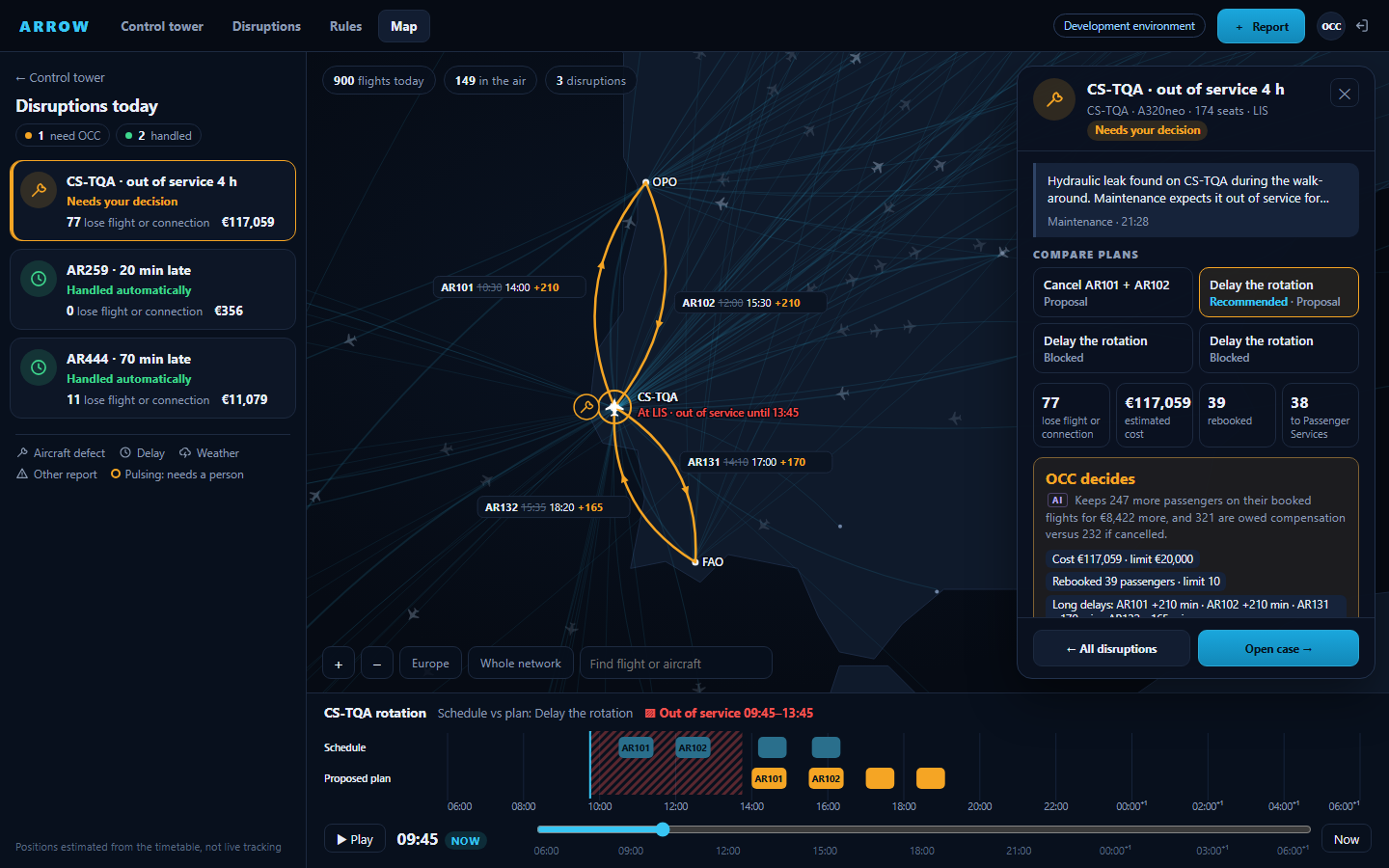
Figure 1. CS-TQA’s recommended plan on ARROW’s map.
How ARROW works
A case starts with a report from the duty manager or an event from an airline system. Azure Service Bus queues the case for a recovery orchestrator in Microsoft Foundry Agent Service.
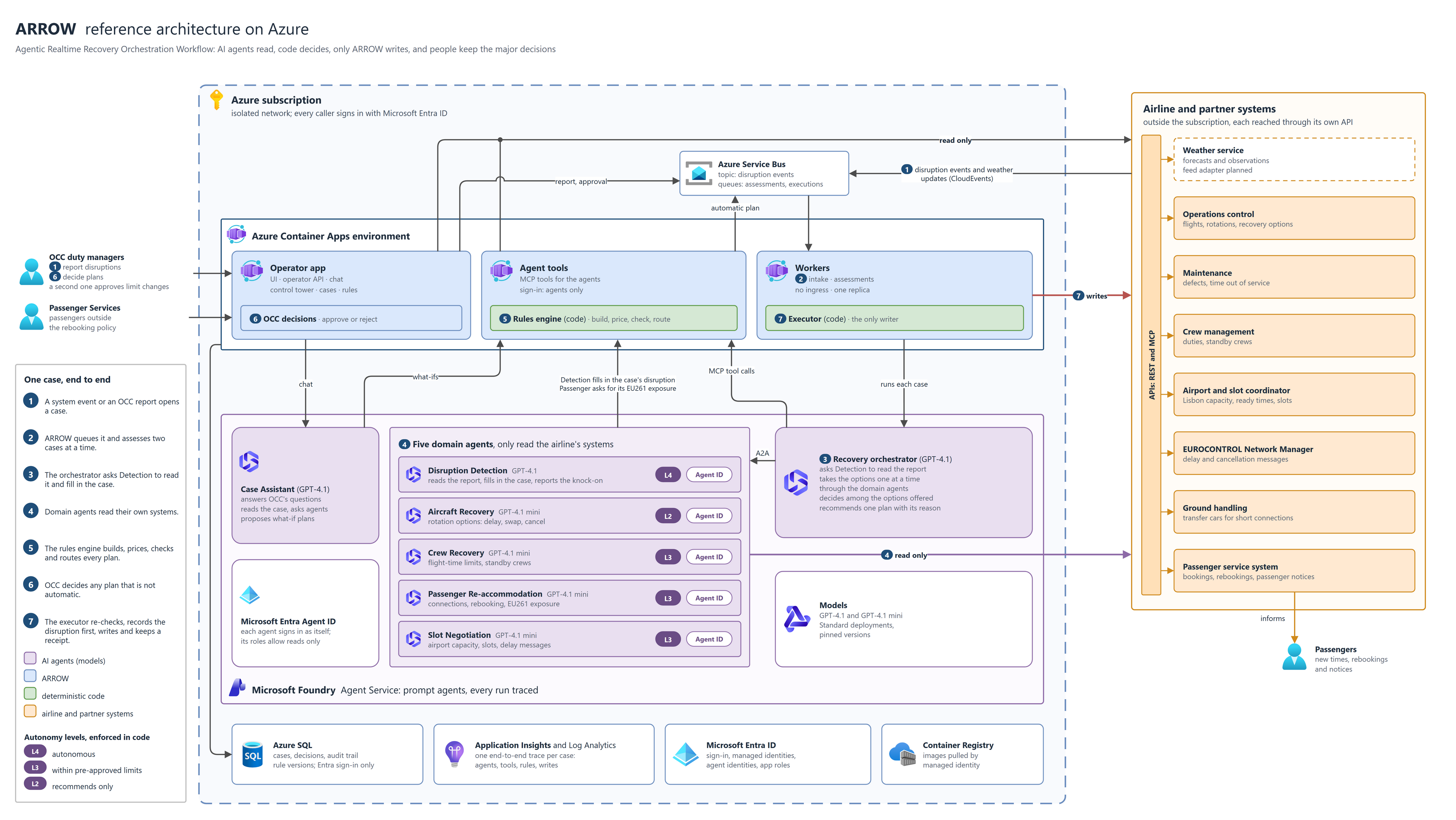
Figure 2. ARROW on Azure; the airline’s systems stay outside. View full-size architecture diagram
The Disruption Detection agent records what the report says with a typed tool, and code checks every value. The Aircraft Recovery agent lists the options. The orchestrator takes them one at a time, delay first, asking the Crew, Passenger and, when departures move, Slot agents over the Agent-to-Agent (A2A) protocol. For each option, code builds and prices a plan. The loop stops at the first plan that may run automatically, or after four.
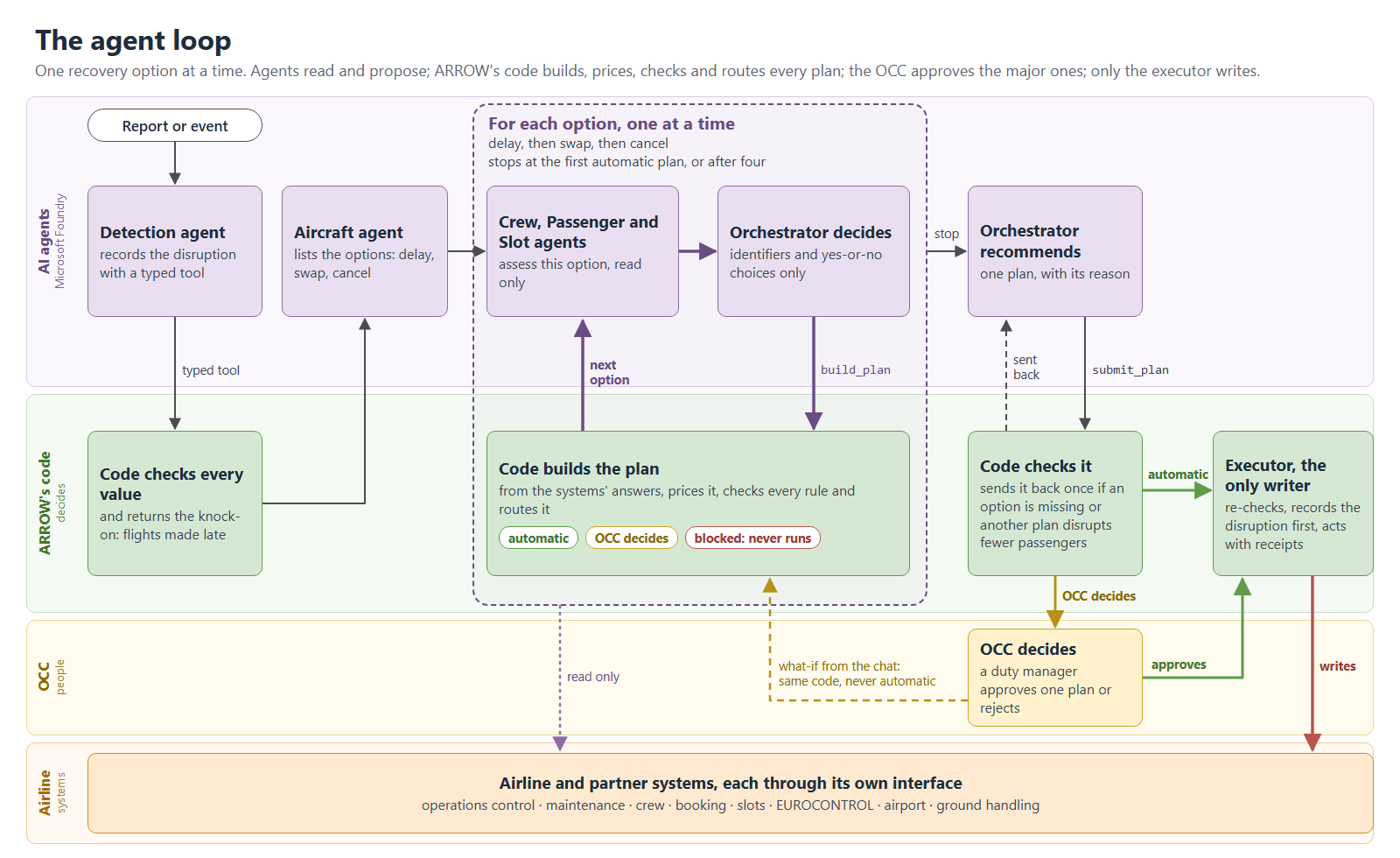
Figure 3. Agents assess one option at a time; code builds and routes each plan.
Agents read. Code acts. People decide. Agents assess and propose without changing airline systems. Code checks, prices and carries out plans. Duty managers approve major decisions and changes to limits.
1. Agents only read
Each domain agent reads its own airline system through Model Context Protocol (MCP) tools, signed in with its own Microsoft Entra Agent ID that holds read roles only [5, 6]. No agent has a tool that changes an airline system. What agents hand back are typed findings and choices, such as an option’s identifier or a yes or no; code rejects anything else. Agents see passenger counts and figures, never names or booking references, which supports data minimization under the General Data Protection Regulation [7].
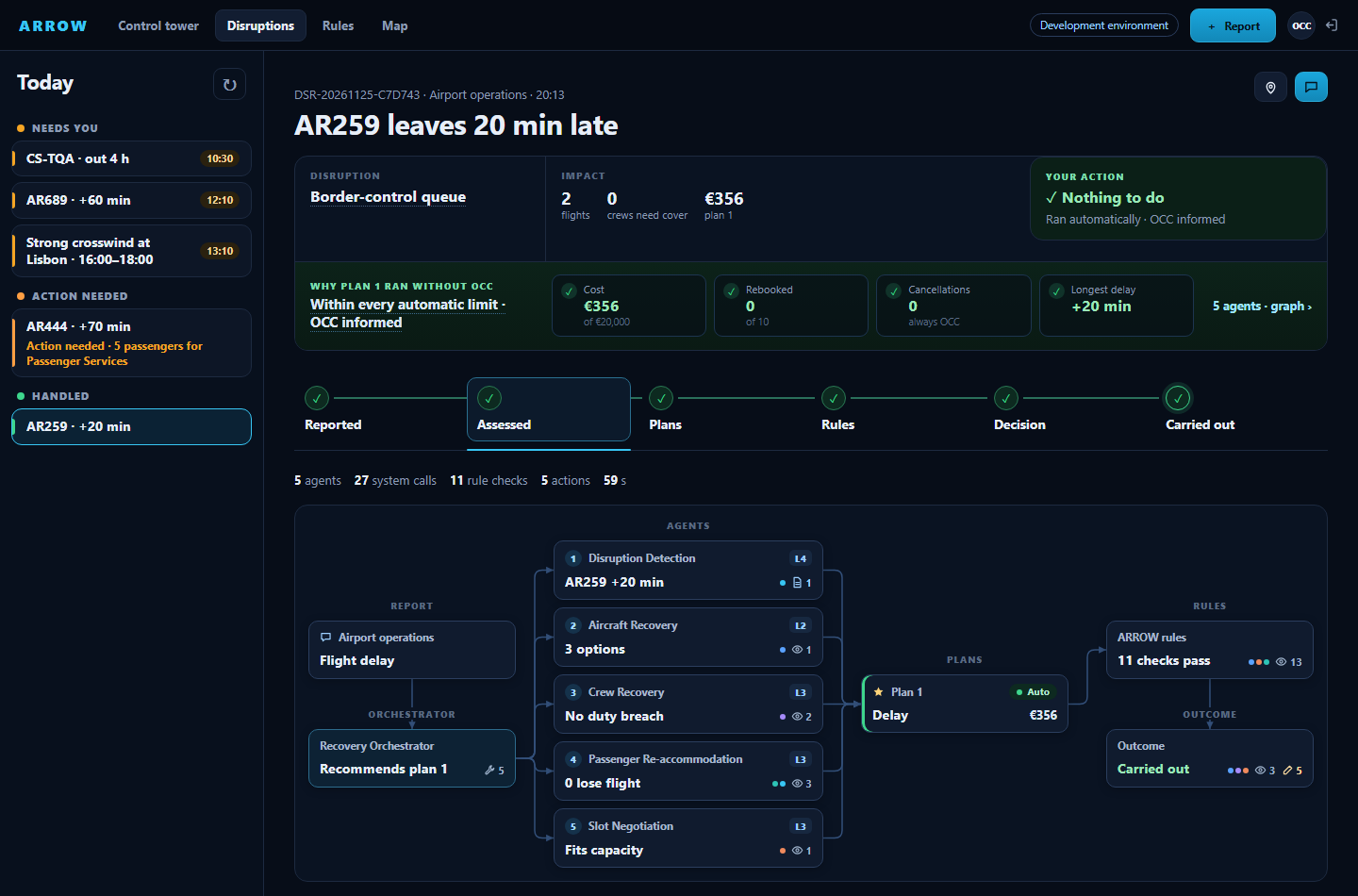
Figure 4. AR259’s 20-minute delay: five agents read and report; code builds, checks and carries out the plan.
2. Code checks and acts
Policy lives in code, not in prompts. Code builds each plan from the systems’ answers, prices it [3, 4] and checks it against rules that each record their input, limit and result as a traffic light. The worst light routes the plan:
- Red, blocked: a safety check fails or cannot be answered, such as a crew over its legal duty time with no standby crew free.
- Amber, the OCC decides: an aircraft change, a cancellation, a cost above €20,000 or more than 10 rebookings.
- Green, automatic: everything within limits.
Under Delay the rotation, 39 of the 77 passengers who lose a flight or connection are rebooked and 38 go to Passenger Services. Its checks:
| Check | Delay the rotation | Limit | Result |
|---|---|---|---|
| Cost | €117,059 | €20,000 | OCC decides |
| Passengers rebooked | 39 | 10 | OCC decides |
| Crew duty | no breach | legal duty limits | OK |
| Lisbon’s capacity | fits | hourly capacity | OK |
Only a separate executor writes, and only for a plan that is automatic or approved. Each action goes through its recipient’s own interface and returns a receipt; a system refuses a change whose data moved on since approval, and the case returns to the OCC. AR259’s 20-minute delay (€356) stayed within every automatic limit, so it ran without the OCC, which was informed. In this development run, the orchestrator finished 59 seconds after the report (Figure 4) and the last receipt arrived at 68 seconds, all in one OpenTelemetry trace in Application Insights [8]. Read-only agent identities, one write path and one trace per case also support incident reporting under the Network and Information Security Directive (NIS2) [9].
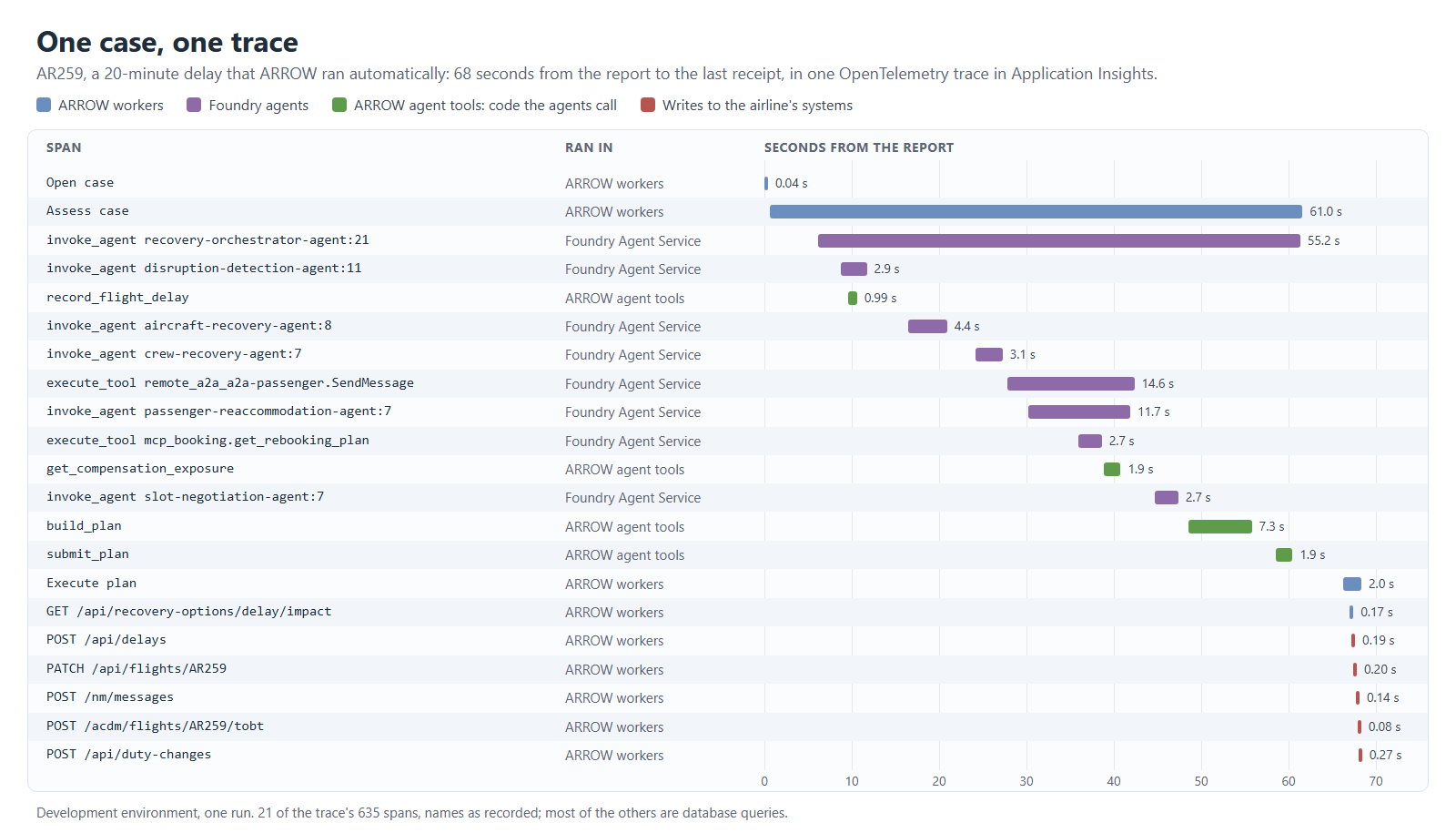
Figure 5. AR259 in one trace: 68 seconds from report to last receipt.
3. People approve major decisions
CS-TQA’s plans cross both automatic limits, so they wait for the duty manager, who sees them side by side: what each costs, who loses a flight and why ARROW recommends one (Figure 6). While deciding, the duty manager can ask the Case Assistant what happens if maintenance takes longer. Asked about two and three hours more, it had code build both plans like any other, and the rules block them: Lisbon’s hourly capacity cannot take the moved flights, and three hours more also breaks the crew’s duty limit. A what-if plan never runs automatically. AI-written text, such as the orchestrator’s reason for its recommendation, is marked as AI, a choice informed by the European Union’s AI Act [10].
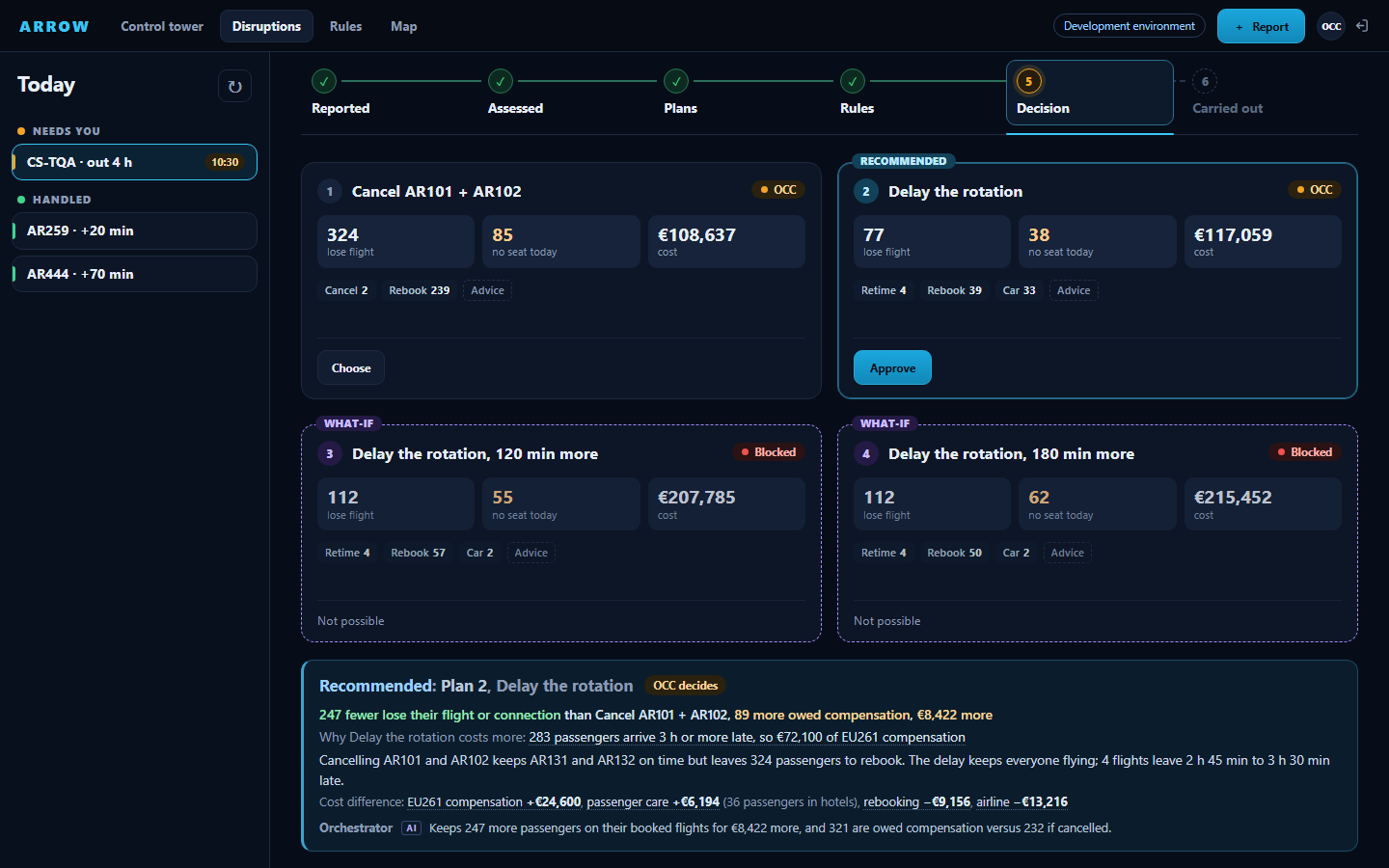
Figure 6. CS-TQA’s two plans and the two what-ifs the rules block, waiting for the duty manager.
The limits belong to people too: one duty manager proposes a change, and a second must approve it. If the agents fail, the OCC still gets any plans already built, without a recommendation; with none, the case stops and nothing runs.
Limitations and next steps
ARROW has not run live, and no airline outcome has been measured; its screens and timings come from a development environment with sample airline systems. The notes on regulation are design support, not legal advice or a compliance claim.
- Integration is the largest piece of work. Many airline and partner systems lack modern interfaces or MCP support. A proxied layer in Azure API Management, with small adapters, could expose them as tools while calling the systems as they are [11].
- Rules to add: union agreements beside the legal crew limits, and the minimum equipment list.
- Proof: a shadow trial beside an OCC, on read-only feeds, comparing ARROW’s plans with the controllers’ decisions.
Get the code
The three rules: agents read, code acts, people decide fit any operation where a wrong action is expensive.
The repository [12] has the code, the architecture decisions and a guide that deploys ARROW into your own Azure subscription.
References
- EUROCONTROL Network Manager, Annual Network Operations Report 2025, Figure 6, 2026; the 44% share is arithmetic on its figures.
- EUROCONTROL Performance Review Commission, Performance Review Report 2025, 2026.
- EUROCONTROL, Standard Inputs for Economic Analyses: cost of delay, release 10.0.2, 2022 prices: Table 16.1, from the University of Westminster’s study for EUROCONTROL, for the figures above; ARROW prices a plan’s own delays at Table 16.2 (at the gate, without knock-on) and cancellations at the Standard Inputs’ Table 14.1.
- Regulation (EC) No 261/2004 on air passenger rights, amended by Regulation (EU) 2026/2202, which applies from 23 October 2027 with unchanged amounts; care is owed even in extraordinary circumstances (McDonagh, C-12/11).
- Microsoft Learn, Connect agents to Model Context Protocol servers and Connect to an A2A agent endpoint.
- Microsoft Learn, What are agent identities in Microsoft Entra Agent ID?
- Regulation (EU) 2016/679, the General Data Protection Regulation.
- Microsoft Learn, Agent tracing overview for Microsoft Foundry, with OpenTelemetry.
- Directive (EU) 2022/2555 (NIS2) and Portugal’s Decree-Law 125/2025.
- Regulation (EU) 2024/1689, the Artificial Intelligence Act, as amended by Regulation (EU) 2026/1744.
- Microsoft Learn, Expose a REST API in API Management as an MCP server.
- ARROW on GitHub: the code, its tests and the step-by-step deployment guide.