
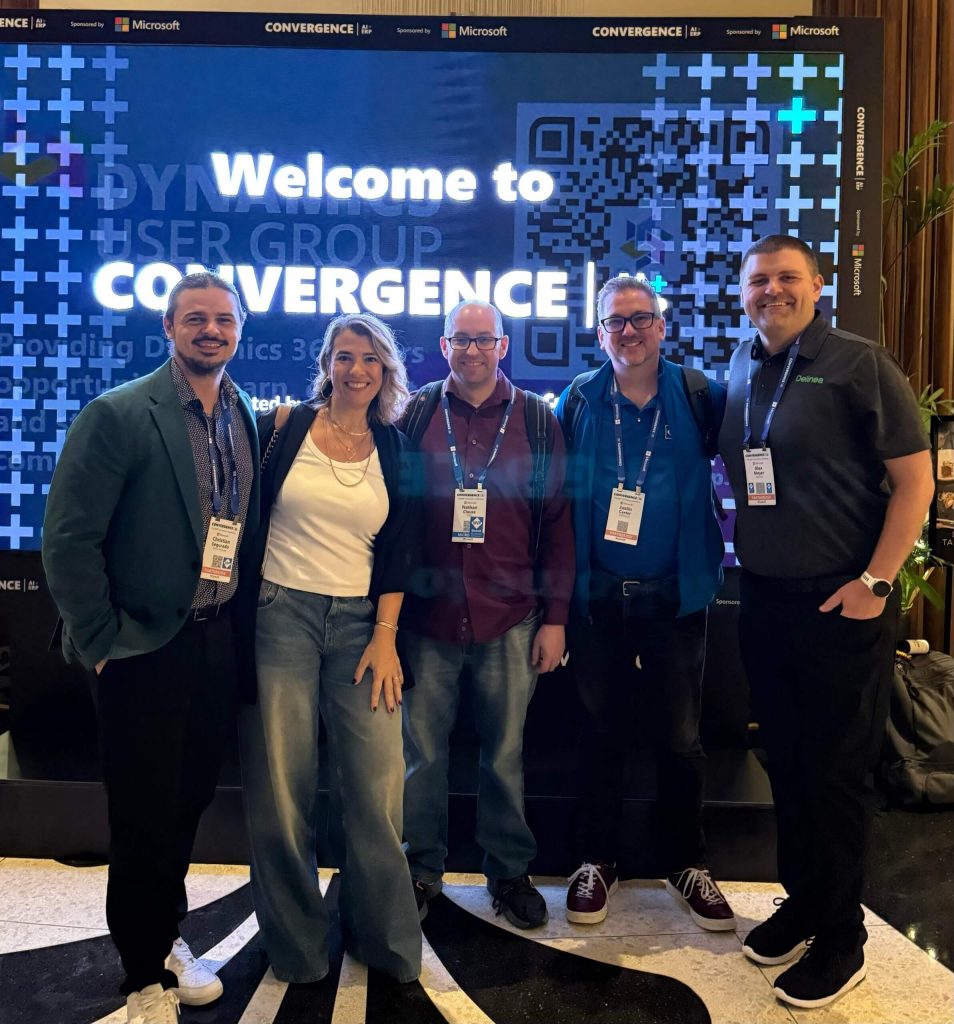
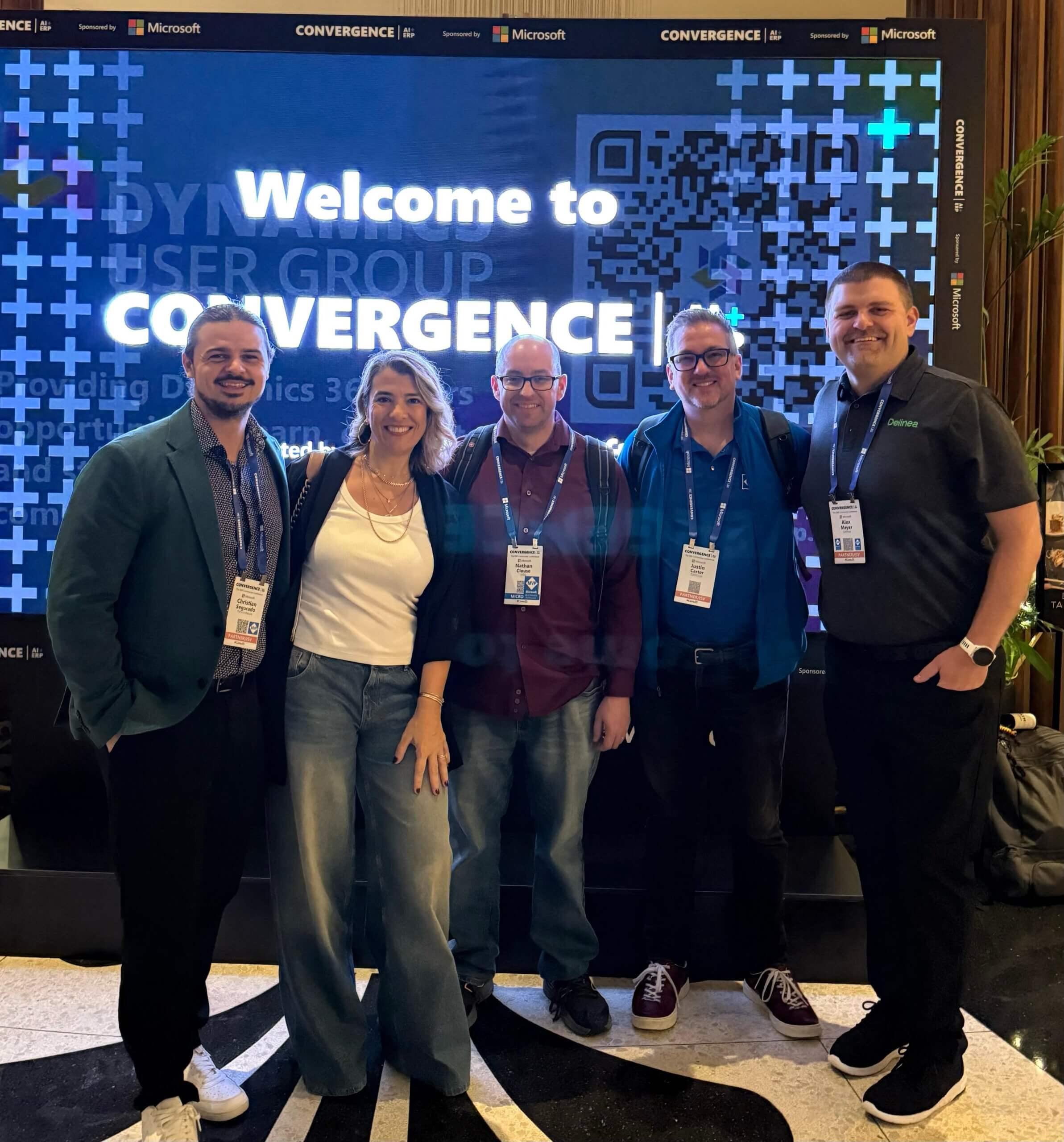
Convergence 2025 is now in the books and it was awesome to have this conference back after over a decade hiatus. It’s always great to be able to connect with clients, peers, and friends and I was very impressed with the Microsoft presence at the event.
With that I wanted to provide some quick technical takeaways from the event itself.
Note: Thanks to Elif Item for making sure we got a picture of the FO Microsoft MVPs at the event!
Dataverse Capacity Licensing Update
The first big takeaway for me actually happened slightly prior to Convergence but we got a lot more clarity of it at the conference. There was a Microsoft blog post on December 4th that talked about simplifying Dataverse capacity licensing:
In this blog post Microsoft implemented two key updates:
- Increased baseline Dataverse capacity across business applications (both Dynamics 365 and Power Platform)
- Simplified storage entitlements across Dataverse and Dynamics 365 ERP applications
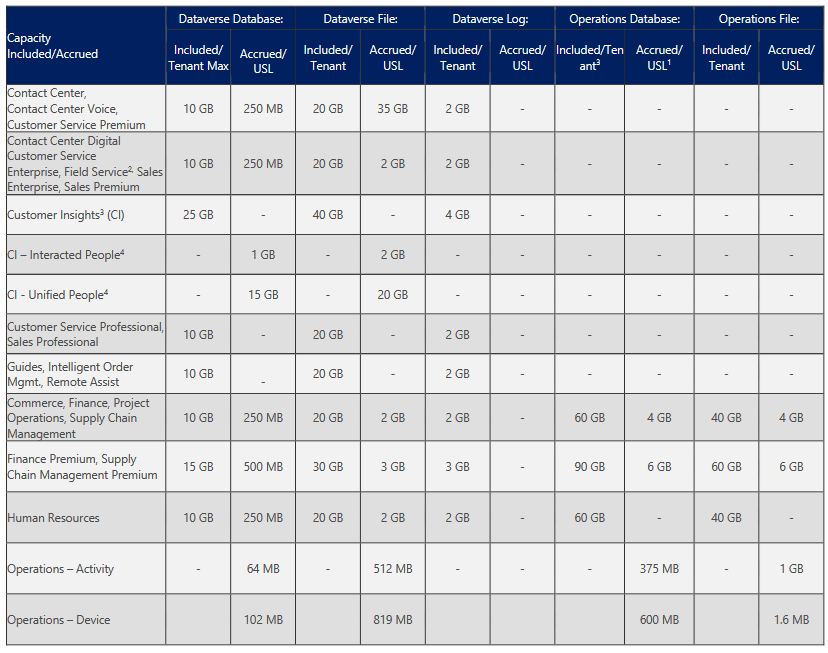
Microsoft is consolidating how capacity works across the operational store and Dataverse. Instead of managing two separate buckets, you now get a combined entitlement. We can see the impact of these changes immediately by looking at the difference between the capacity entitlements in the November and December licensing guides from this year.
November 2025 Licensing Guide
December 2025 Licensing Guide
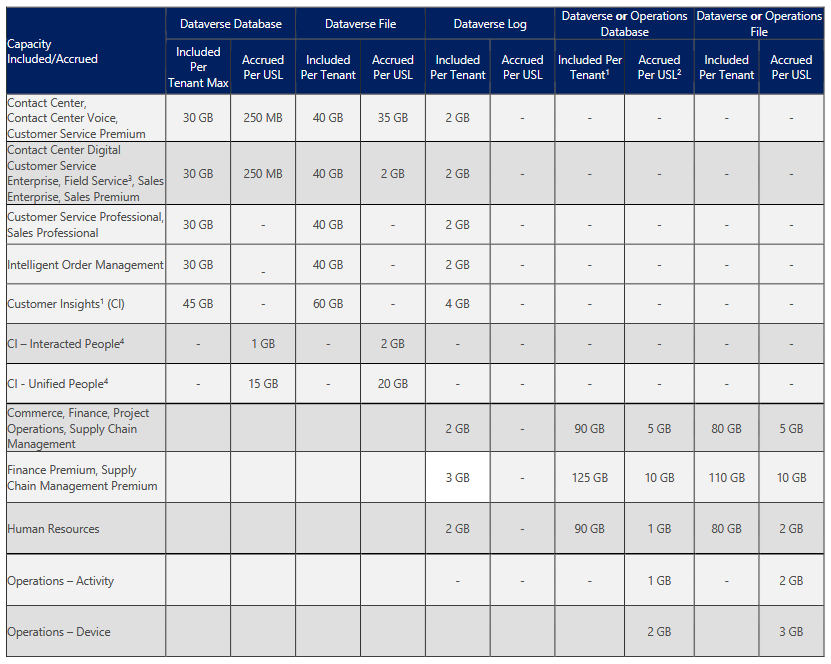
Some key differences include:
Commerce, Finance, Project Operations, Supply Chain Management:
- Operations Database: 60 GB → 90 GB per tenant (50% increase)
- Operations File: 4 GB → 5 GB per tenant
Finance Premium, Supply Chain Management Premium:
- Operations Database: 90 GB → 125 GB per tenant (39% increase)
- Operations File: 6 GB → 10 GB per tenant (67% increase)
For Premium customers, this is particularly significant. You’re getting an extra 35 GB of database capacity and 4 GB more file storage. That’s real room to grow, especially as Microsoft continues pushing capabilities like AI-assisted approvals that generate more metadata and contextual information.
Human Resources:
- Operations Database: 60 GB → 90 GB per tenant (50% increase)
- Operations File: Staying at 1 GB per tenant (though I suspect this is because HR doesn’t typically generate massive file volumes)
The “Dataverse or Operations” Flexibility
One of the most important changes isn’t just about the numbers, it’s about how capacity is allocated. The new model creates unified “Dataverse or Operations Database” and “Dataverse or Operations File” pools. This means:
- You’re no longer locked into rigid boundaries between Dataverse and the operational store
- If your AI workflows generate more Dataverse data, you can use the shared pool without hitting an artificial wall
- If your F&O transactional data grows faster than expected, the capacity flexes to accommodate it
Interesting Note
There does seem to be a conscious push to get more ‘premium license’ adoption as it may now be cheaper to upgrade a user from base Finance or SCM ($210/month) -> Premium ($300/month USD) to get the additional capacity than it would be to purchase the Dataverse capacity outright (at $40 GB / month USD).
PPAC FinOps Cloud Deployments Goes GA
This has been a long time in the making but PPAC has now taken the crown as the default provider for managing new instances of D365 FinOps as it is finally GA.
As part of this process starting February 16th 2026, no new LCS environments will allowed to be created and all new deployments will instead be directed towards utilizing PPAC.
Current LCS environments will not be impacted on this date, but future migration capabilities will be added to support the move from LCS -> PPAC.
There is a notification within PPAC surrounding this announcement:
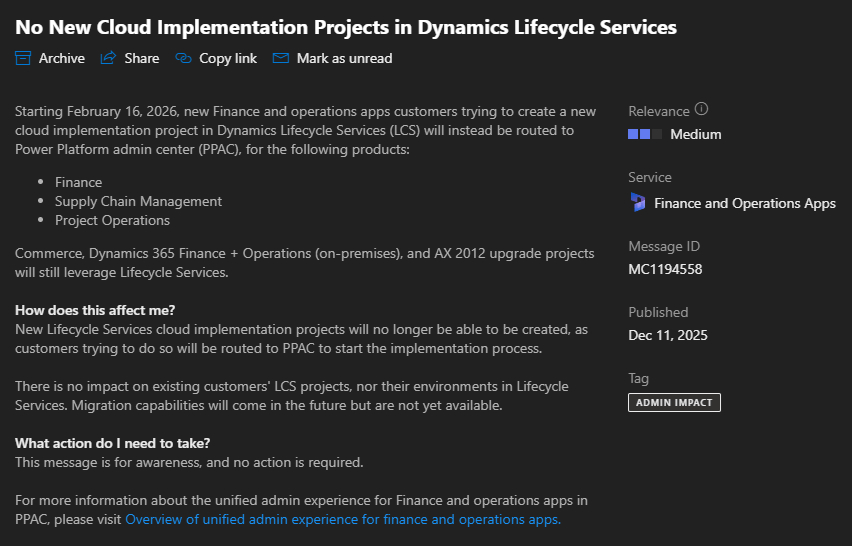
This is a huge step forward in the ‘One Dynamics One Platform’ journey and a huge kudos to the Microsoft team for achieving this.
Lane Swenka’s LinkedIn update on this can be found here.
Conference Sessions
It’s always an honor to present at conferences, and it was great to be able to present two joint sessions as a co-presenter.
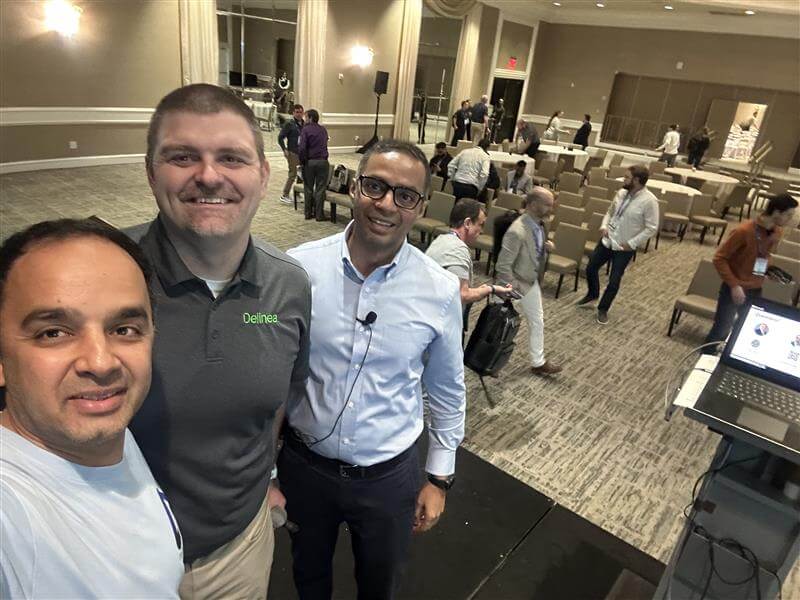
I presented an update on D365 licensing along with Mo Baygi and Saurabh Kuchhal:

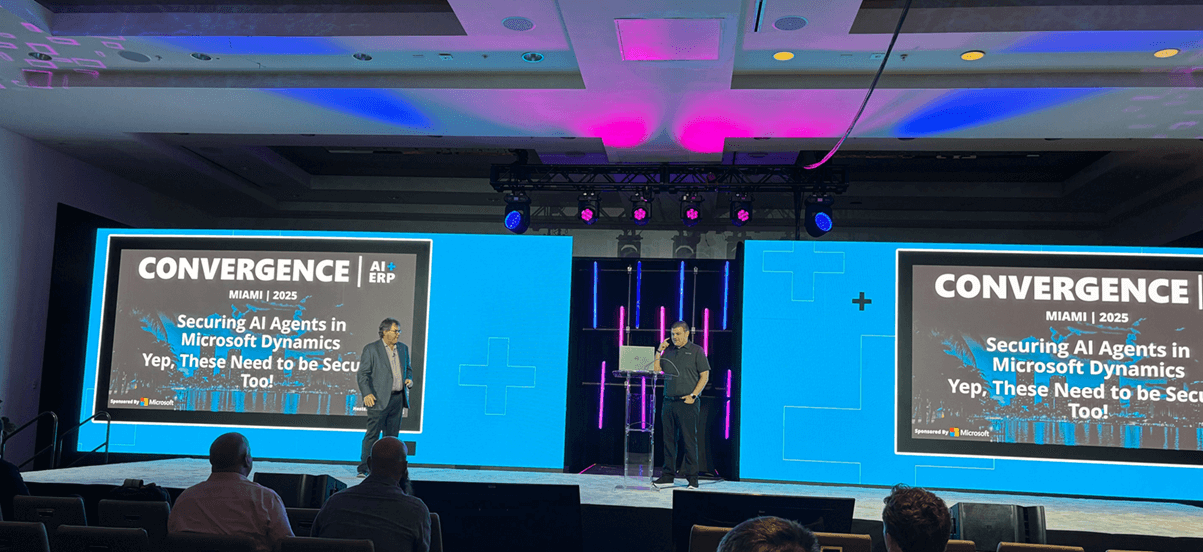
It was also really cool to be able to present with my colleague Frank Vukovits on the keynote stage talking about securing AI agents within business applications:
I am excited to see the growth of AI over the next year and looking forward to Convergence 2026!
Resources
- Microsoft’s Official Blog Post on Dataverse Capacity Changes
- Dynamics 365 Licensing Guide (December 2025) – Check page 43 for detailed capacity tables
- Dataverse Storage Documentation
- F&O Storage Capacity Documentation
on January 1, 2026 at 4:23 am
This is an excellent and very clear breakdown of the most meaningful takeaways from Convergence 2025. The clarification around Dataverse capacity licensing and the move toward a unified “Dataverse or Operations” pool is especially valuable, as this is an area that often creates confusion for customers during planning and scaling discussions. The increased baseline capacity for premium licenses will make a real difference, particularly as AI-driven features continue to generate more data. The PPAC GA update for FinOps is also a big step forward toward a more unified Dynamics ecosystem. Thanks for sharing such a practical and well-explained recap. You can check our related service here https://adremtek.com/