

EDIT: Microsoft 365 Copilot for Sales is rebranded as Sales in Microsoft 365 Copilot since November 2025.
What if your sales team could ask a Copilot to check contract status in your ERP, pull support tickets from your ITSM system, or analyze energy consumption trends from your data lake—all without leaving Outlook or Teams? That’s the promise of extending Copilot for Sales, and it’s finally within reach.
Over the past year, I’ve been deeply immersed in Copilot for Sales—testing its capabilities, understanding its limitations, and eagerly awaiting the extensibility features that would unlock its full potential. When Microsoft announced the ability to extend Copilot for Sales through Copilot Studio (still in preview), I knew this was a game-changer. I’ve since delivered community sessions to evangelize these capabilities, and now I’m documenting everything in this comprehensive guide, so everyone can access this knowledge—whether you attended those sessions or are discovering this for the first time.
- Copilot for Sales Foundations
- Get your bearings: understand how Copilot for Sales works, the difference between “Copilot for Sales” and “Copilot in Sales,” and where extensibility fits in the Dynamics 365 landscape.
- Extension Points and Connector Architecture
- Learn the architecture: how extension points work, how custom connectors bridge external systems, and how Azure App Services add intelligent business logic.
- Hands-On: Building Custom Extensions
- Build it yourself: a hands-on walkthrough to create, configure, and deploy your own custom extension using Copilot Studio.
By the end, you’ll have a working example and the confidence to tailor Copilot for Sales to your organization’s unique needs.
- Build it yourself: a hands-on walkthrough to create, configure, and deploy your own custom extension using Copilot Studio.
By the end, you’ll have a working example and the confidence to tailor Copilot for Sales to your organization’s unique needs.
Copilot for Sales Foundations
Before we dive into building custom extensions, let’s establish a solid foundation. Understanding how Copilot for Sales works, what it connects to, and where it fits in the Microsoft ecosystem is crucial for successful extensibility.
What is Copilot for Sales?
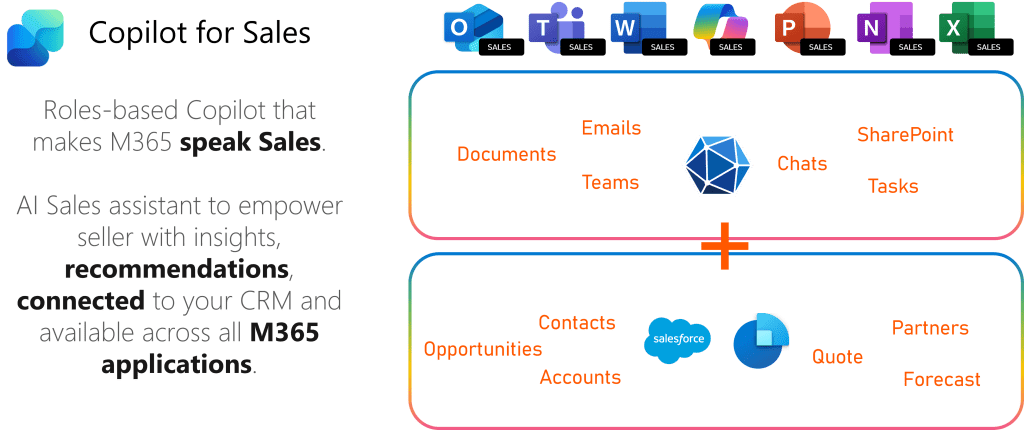
Copilot for Sales is Microsoft’s AI-powered sales assistant designed to work within the tools sellers already use daily—Outlook, Teams, Word, and other Microsoft 365 applications. Think of it as a roles-based layer that makes Microsoft 365 “speak Sales,” transforming generic productivity tools into specialized sales instruments. At its core, Copilot for Sales is an AI assistant that empowers sellers with insights, recommendations, and automation capabilities, all while staying connected to your CRM. It surfaces relevant customer information, suggests next steps, generates email summaries, prepares meeting recaps, and helps update CRM records—without forcing sellers to context-switch between applications.
The key integration points include:
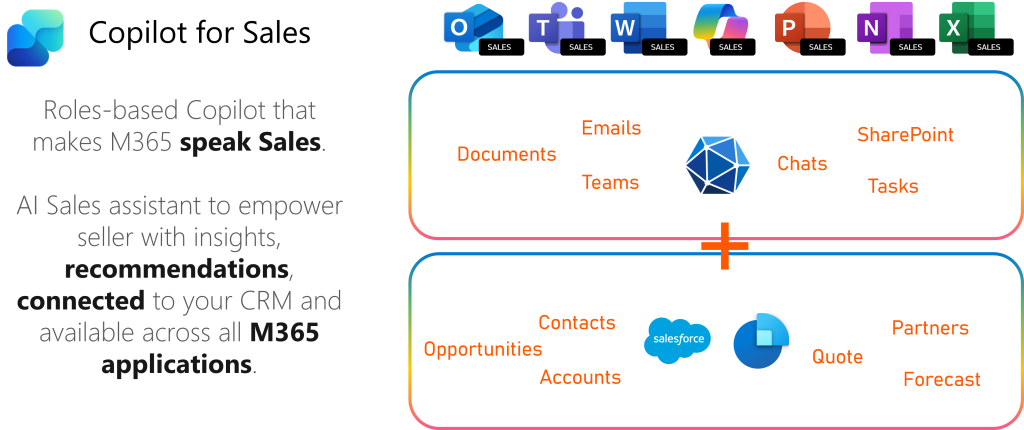
- Microsoft 365 Apps: Emails in Outlook, documents in Word, chats in Teams, presentations in PowerPoint etc.
- CRM Systems: Native support for Dynamics 365 Sales and Salesforce, with side pane in outlook to interact with the connected CRM System.
- Microsoft Graph: Access to organizational data like SharePoint documents, Teams chats, and calendar events.
- External Data Sources: Through extensibility (which we’ll explore in this guide), Copilot For Sales can connect to ERPs, ITSM systems, data lakes, and virtually any business system.
Copilot for Sales Experiences
Copilot for Sales delivers its capabilities through multiple experience types, each designed for different interaction patterns:
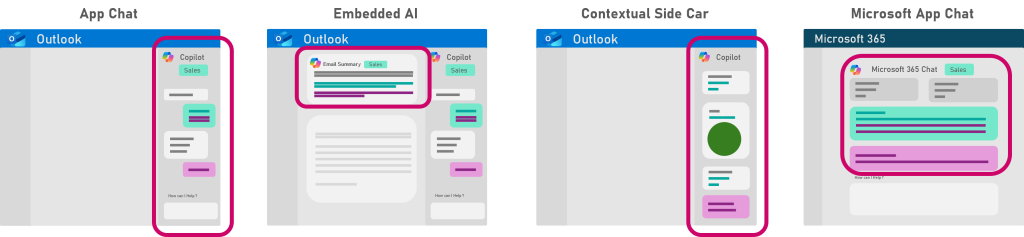
As shown in the diagram, there are four primary experience modalities:
- App Chat: A dedicated chat interface within Outlook where sellers can have conversational interactions with Copilot for Sales, asking questions and receiving AI-powered responses.
- Embedded AI: AI capabilities embedded directly into email composition and other workflows, such as email summaries generated inline.
- Contextual Side Car: A persistent side panel in Outlook that displays relevant CRM information, contact details, and contextual insights based on the current email or meeting.
- App Chat (Microsoft 365): Integration with the broader Microsoft 365 Chat experience, allowing sales queries within the unified Microsoft 365 Copilot interface.
These experiences work together seamlessly, giving sellers the flexibility to interact with Copilot in the way that best suits their workflow at any given moment.
How Copilot for Sales Leverages Data
The power of Copilot comes from its ability to intelligently orchestrate data from multiple sources and present it in context. What makes this particularly powerful is the symbiotic relationship between Microsoft 365 Copilot and Copilot for Sales. When you ask Microsoft 365 Copilot a sales-related question—for example, “Create a proposal document for this customer highlighting our solutions that address their recent support issues”—here’s what happens:
- Prompt Analysis: Microsoft 365 Copilot analyzes your prompt and recognizes this is sales-related content
- Copilot for Sales Activation: It automatically leverages Copilot for Sales as a specialized plugin to access sales-specific data
- Multi-Source Data Retrieval: Copilot orchestrates queries across:
- Your CRM to find account details and open opportunities
- Microsoft Graph to find recent emails and Teams conversations about your customer
- SharePoint to locate relevant product documentation
- Your custom extensions (via Copilot Studio) to pull support tickets from your system
- Intelligent Synthesis: All this data is fed to the Large Language Model (LLM)
- Content Generation: The LLM generates your Word document, contextually aware of your customer business needs, recent interactions, support history, and relevant solutions
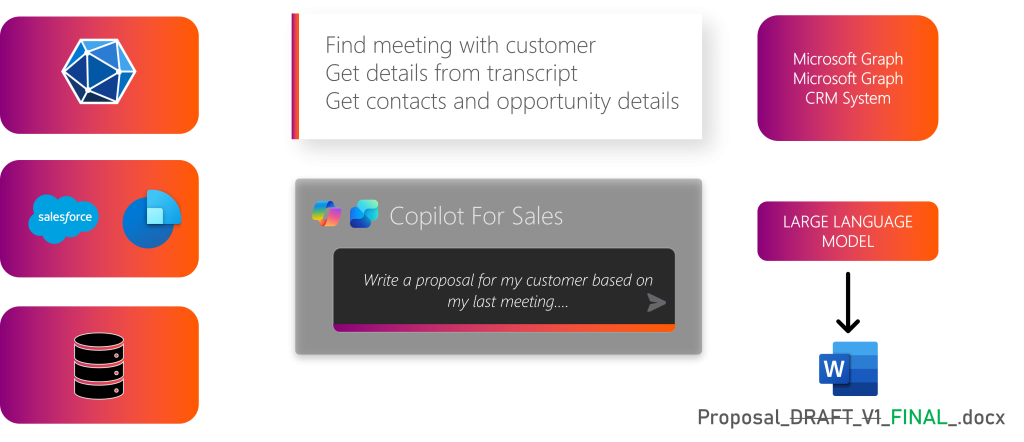
It means that custom extensions you build aren’t isolated—they become part of the broader Microsoft 365 Copilot intelligence (if you have both). When you extend Copilot for Sales with a connector to your ERP or data lake, that data can become available not just in the Copilot For Sales side pane, but also when Microsoft 365 Copilot is generating documents and using Copilot For Sales, preparing presentations, or drafting emails.
The Extensibility Advantage: Copilot for Sales  Copilot Studio
Here’s where things get exciting. Out of the box, Copilot for Sales connects to your CRM and Microsoft 365 data. But what about all those other critical business systems—your ERP, your ITSM platform, your custom data lake, your specialized industry applications?
This is where Microsoft Copilot Studio (MCS) and the extensibility framework come into play. Through Copilot Studio, you can:
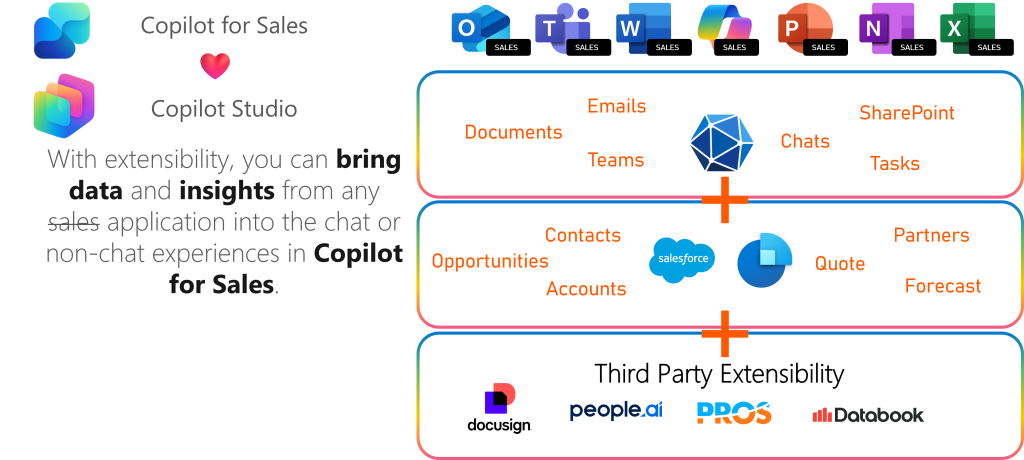
- Extend via Power Platform Connectors: Connect to hundreds of pre-built connectors or create custom connectors to any REST API Leverage
- Market Extensions: Use third-party extensions from partners like DocuSign, People.ai, PROS, or even Databook.
- Build Custom Solutions: Author entirely custom extensions tailored to your organization’s unique workflows and data sources
Copilot FOR Sales vs. Copilot IN Sales
One of the most common points of confusion is understanding the difference between “Copilot for Sales” and “Copilot in Sales.” While the names sound similar, they address different use cases and are complementary within the Dynamics 365 ecosystem.
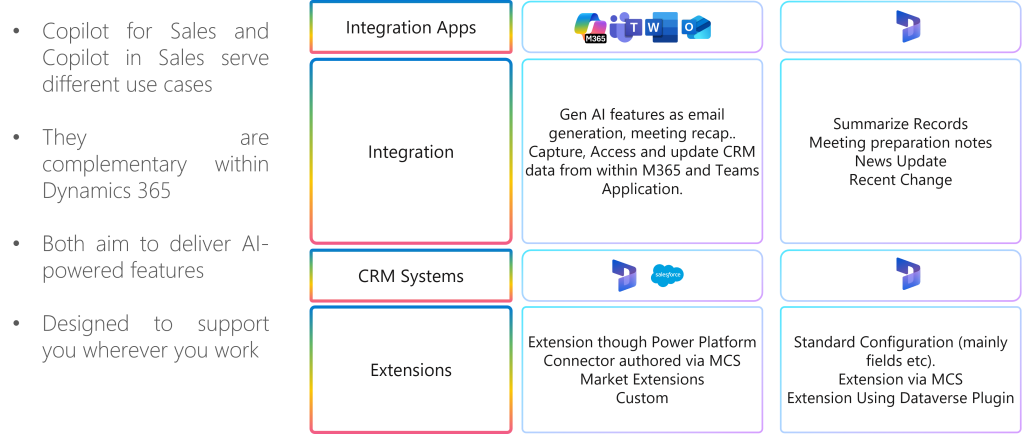
- Copilot IN Sales is the native AI experience within Dynamics 365 Sales itself. It provides record summarization, contextual insights, preparation assistance directly in the CRM interface etc.
- Copilot FOR Sales is about bringing AI-powered sales capabilities to where sellers already work—their inbox, their meetings, their documents. It’s the bridge between Microsoft 365 and your CRM, ensuring that sales teams don’t need to constantly switch contexts or manually transfer information between systems.
Their common goal is to bring AI-powered features to you, no matter where you work. Whether you’re crafting an email in Outlook or reviewing an opportunity in Dynamics 365, Copilot is there to assist.
Real-World Extensibility Scenarios
Let’s ground this in practical examples. With custom extensions, you could enable scenarios like:
- Contract Status from ERP: Copilot could pull contract status from your SAP or NetSuite system and inform sellers if a customer is delayed on payment before they offer a new deal
- Support Context from ITSM: Summarize the latest support tickets from ServiceNow or Jira before answering a customer email, giving sellers full visibility into customer health
- Analytics from Data Lakes: Query your Azure Data Lake or Snowflake warehouse to answer questions like “Which customers had the highest energy consumption increase this quarter?”
- Shipment and Inventory Data: Access real-time shipment tracking and inventory levels from your logistics systems, helping sellers manage customer expectations in real-time
These aren’t futuristic possibilities—they’re achievable today with the extensibility framework we’ll explore in this guide.
Extension Points and Connector Architecture
Now that we understand what Copilot for Sales is and how it leverages data from multiple sources, let’s explore how extensibility actually works. This chapter breaks down the architecture, explains what happens when you add an extension, and provides practical guidance for makers looking to enhance Copilot for Sales with custom capabilities.
Understanding Extension Points (Preview)
Extension points are the integration hooks where you can inject custom functionality into Copilot for Sales. Think of them as designated places in the user experience where your custom data and actions can surface.
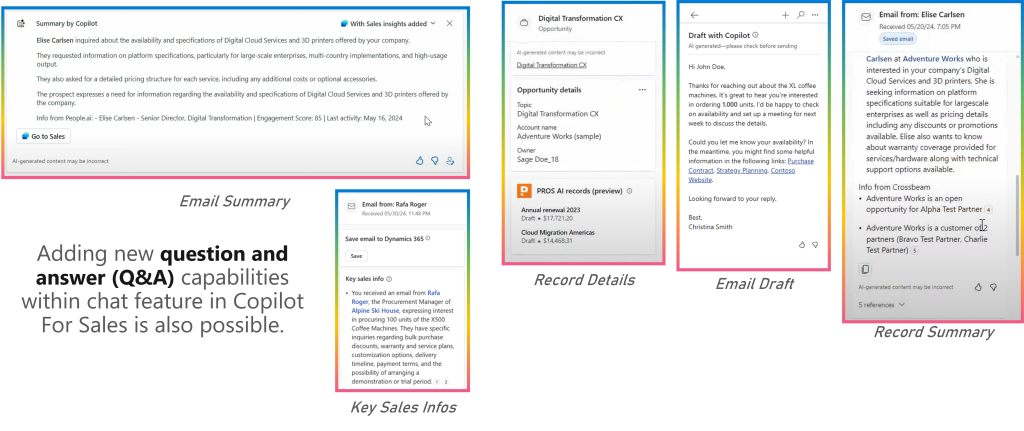
As of today, you can enhance the following capabilities through custom extensions:
- Email Summary: Enhance the AI-generated email summaries that appear in Outlook. Your custom extension can add additional sales insights that will be displayed in the Copilot for Sales email summary experience. For example, you could pull contract status from your ERP and surface it alongside the standard CRM data.
- Key Sales Infos: Enrich the key sales information card that appears in the Outlook side pane. This card displays critical context about the customer, and your extension can contribute additional data points—like recent support tickets from your ITSM system or pending orders from your e-commerce platform.
- Record Details: Supplement CRM record details shown in the contextual side panel. When a seller views an opportunity or account, your extension can surface related information from third-party systems, such as contract renewal dates from DocuSign or customer health scores from your analytics platform.
- Email Draft: Provide contextual information during email composition. When a seller is drafting an email, your extension can surface relevant data that helps them craft more informed, personalized messages—like product availability from inventory systems or recent case history.
- Record Summary: Add insights to AI-generated record summaries. When Copilot summarizes an account or opportunity, your extension can contribute additional context from external systems to create a more complete picture.
How Does Extensibility Work?
Let’s demystify the architecture. When you extend Copilot for Sales, you’re creating a bridge between the AI experiences and your external data sources. Here’s how all the pieces fit together:
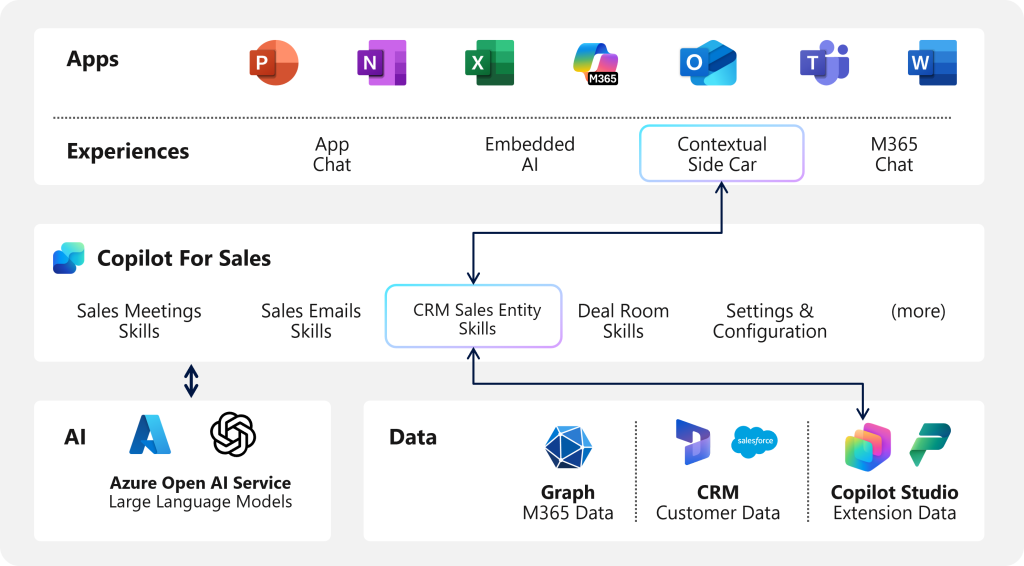
At the top, we have the Microsoft 365 applications where sellers work: PowerPoint, OneNote, Excel, Planner, Outlook, Teams, and Word. These apps host different Copilot for Sales experiences:
- App Chat: Conversational interface for asking questions
- Embedded AI: AI features embedded directly in the workflow
- Contextual Side Car: The persistent side panel with CRM context (this is where most extensions surface)
- M365 Chat: Integration with broader Microsoft 365 Copilot
The Middle Layer is where Copilot for Sales orchestrates and integrates its various capabilities, known as “skills:
- Sales Meetings Skills
- Sales Emails Skills
- CRM Sales Entity Skills (highlighted in blue) – This is what we’re seeing in this blog post
- Deal Room Skills
- Settings & Configuration And more
The CRM Sales Entity Skills layer is where your custom actions and data integrations become available to the AI. The Bottom Layer represents the underlying data sources and AI-driven intelligence:
- AI: Azure OpenAI Service with Large Language Models that power the generative capabilities
- Data: Three primary sources:
- Graph (M365 Data): Microsoft 365 organizational data
- CRM (Customer Data): Dynamics 365 and Salesforce logos representing native CRM connectivity
- Copilot Studio Extension Data (highlighted in blue): This is where YOUR custom extensions live
Notice the arrows connecting the layers. When a seller interacts with Copilot—whether asking a question in chat, viewing a record summary, or drafting an email—the system:
- Processes the request through the appropriate skill
- Determines what data is needed
- Queries the relevant data sources (M365 Graph, CRM, and your custom extensions via Copilot Studio)
- Feeds all retrieved data to the Azure OpenAI LLM
Extensions developed through Copilot Studio become first-class data sources in this architecture. They’re queried alongside your CRM and Microsoft 365 data, enabling truly comprehensive AI responses. We can either develop our own extensions or leverage third-party ones to enhance the out-of-the-box Copilot for Sales skills with custom data.
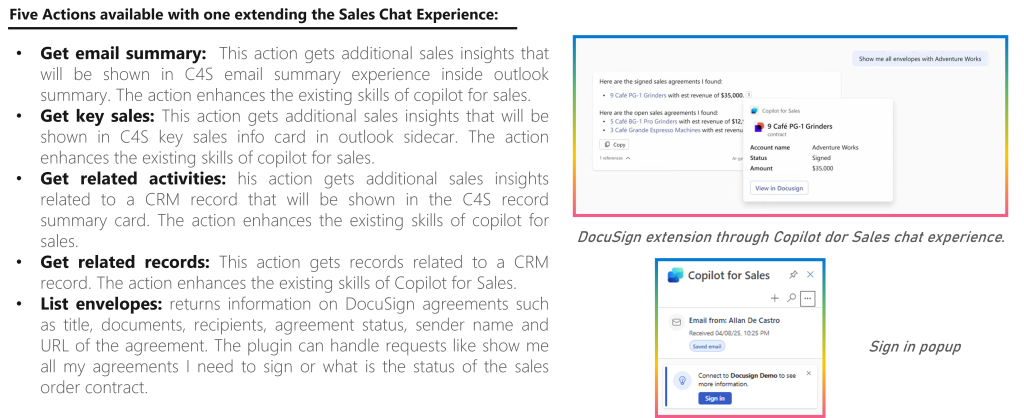
Market Extension Example: Adding the DocuSign Extension
Let’s see a popular third-party extension available in the marketplace. The DocuSign extension provides five actions that extend the Sales Chat Experience:
What Gets Created in Your Solution?
When you add an extension to Copilot for Sales through Copilot Studio, several components are automatically created in your Power Platform environment. Understanding these components helps you manage, troubleshoot, and govern your extensions effectively.
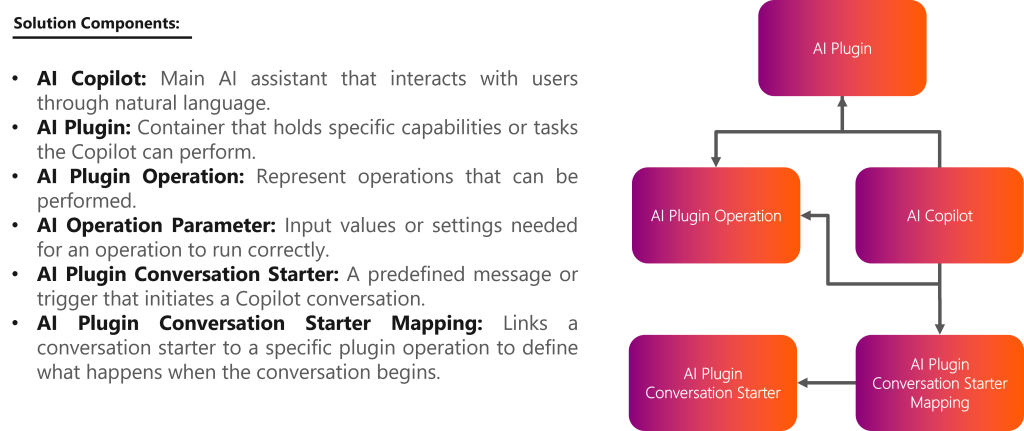
The simple diagram shows how these components relate to each other. The AI Copilot is the central hub, connecting to AI Plugins, which contain AI Plugin Operations. Those operations have parameters that define their inputs, and conversation starters (with their mappings) provide easy entry points for users. Understanding these components is important because it will helps you especially when you want to delete some of these components (as it’s not possible to do it in Copilot Studio).
Maker’s Tips: Best Practices for Success
Before you dive into building your own extensions, here are some essential tips to ensure a smooth development and deployment experience:
- To begin customizing Copilot for Sales, you must first sign in through Outlook. If Copilot for Sales is not visible in Copilot Studio, contact your administrator to deploy the enhanced Copilot for Sales app in Teams.
- Actions enabled by your administrator may take up to 12 hours to be reflected in Copilot for Sales experiences.
- If the connector has been restricted for direct use with Microsoft 365, that restriction is not enforced here—you are responsible for reviewing and aligning with your organization’s policies.
- Plugin must be enabled per environment. This setup offers a good opportunity to define a pilot group for testing or to target specific users.
- Ensure that users are assigned the Microsoft Copilot User security role or have the appropriate privileges.
You now understand the architecture of Copilot for Sales extensibility, how extension points work, what components are created in your solution, and the key considerations for makers. This foundation prepares you for the next chapter, where we’ll get hands-on.
In the Hands-On: Building Custom Extensions chapter, we’ll walk through the complete process of creating a custom extension from scratch—selecting a data source, building a custom connector, configuring the plugin, mapping conversation starters, and testing the experience end-to-end.
Hands-On: Building Custom Extensions
Theory is valuable, but nothing beats building something real. In this chapter, we’ll walk through the complete process of creating a custom extension for Copilot for Sales—from building an API backend to configuring the connector, adding actions to the Copilot agent, and seeing it work in action. By the end of this walkthrough, you’ll have created a working extension and understand exactly how to replicate this process for your own organization’s unique data sources and business requirements.
Understanding What Copilot for Sales Expects
Before we start building, it’s critical to understand the requirements and expectations that Copilot for Sales has for custom extensions. Getting these details right is the difference between an extension that works seamlessly and one that fails to trigger or display results.
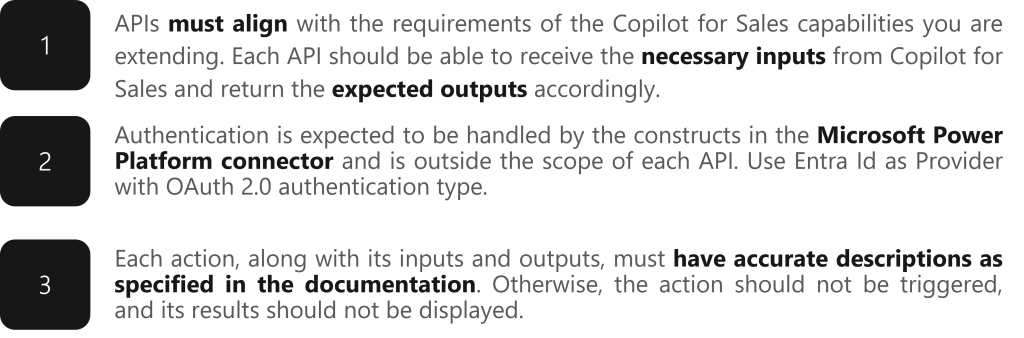
Accurate descriptions are absolutely critical—if they’re unclear or missing, your actions may never trigger or never discovered at all, leading to wasted time troubleshooting. The best way to avoid this is to reuse the Swagger example provided by Microsoft , ensuring all required descriptions, inputs, and outputs are properly in place from the start. This approach saves effort and guarantees alignment with Copilot for Sales expectations.
Understanding the Extension Points
For our proof-of-concept, we’ll implement two extension points that demonstrate different capabilities. Let’s examine what inputs and outputs Copilot for Sales expects for each.
Extension Point 1: Enrich CRM Record Summaries
Goal: Enhance Copilot for Sales by providing additional sales insights from your application to enrich CRM record summaries with relevant context for meetings and emails. This extension point allows you to surface contextual information when a seller views an opportunity, account, or contact record.
Expected Inputs (What Copilot sends to your API):
{
  "recordType": "opportunity",  // Can be opportunity, account, contact
  "recordId": "123e4567-e89b-12d3-a456-426614174000",
  "startDateTime": "2025-05-01T08:00:00Z",
  "endDateTime": "2025-05-24T17:00:00Z",
  "top": 10,
  "skip": 0,
  "crmType": "Dynamics 365",  // Can be Salesforce
  "crmOrgUrl": "contoso.crm.dynamics.com"
}
Key fields explained:
- recordType: The type of CRM record being viewed
- recordId: Unique identifier for the record
- startDateTime/endDateTime: Time range for filtering related data
- top/skip: Pagination parameters (retrieve top N results, skip M results)
- crmType: Which CRM system (Dynamics 365 or Salesforce)
- crmOrgUrl: The organization’s CRM URL for potential deep linking
Expected Outputs (What your API returns):
{
  "value": [
    {
      "title": "Contract signed",
      "description": "You have 5 connections in Fourth Coffee Inc",
      "category": "2024-05-07T03:28:38Z",
      "url": null,
      "additionalProperties": {
        "Contract name": "50 Cafe-A-100 Automatic Renewal Contract",
        "Signed by": "Alberto Burgos, Tony",
        "Signed": "2023-09-07"
      }
    }
  ]
}
Key fields explained:
- title: A concise, attention-grabbing headline for the insight
- description: Natural language description of what this insight means
- category: Timestamp or category for organizing insights
- url: Optional deep link to view more details in your system
- additionalProperties: Key-value pairs with structured data that enriches the context
Extension Point 2: Enrich CRM Record Details
Goal: Extend Copilot for Sales by providing related records from your application to enrich CRM contact details with additional contextual insights. This extension point allows you to show related documents, contracts, support tickets, or other records when viewing contact or account details.
Expected Inputs (Same structure as record summaries):
{
  "recordType": "opportunity",
  "recordId": "123e4567-e89b-12d3-a456-426614174000",
  "top": 10,
  "skip": 0,
  "crmType": "Dynamics 365",
  "crmOrgUrl": "contoso.crm.dynamics.com"
}
Expected Outputs:
{
  "value": [
    {
      "recordId": "ID1",
      "recordTypeDisplayName": "Contract",
      "recordTitle": "50 Cafe-A-100 Automatic Renewal Contract",
      "recordTypePluralDisplayName": "Documents",
      "recordType": "contract",
      "url": "https://contosohub.com/contract/id1",
      "additionalProperties": {
        "Status": "Signed",
        "Date": "9/7/23",
        "Signed by": "Alberto Burgos, Tony [last name]"
      }
    }
  ],
  "hasMoreResults": false
}
Key fields explained:
- recordId: Unique identifier for the related record
- recordType: Machine-readable type (e.g., “contract”, “ticket”, “invoice”)
- recordTypeDisplayName: Human-readable singular name (e.g., “Contract”)
- recordTypePluralDisplayName: Human-readable plural name (e.g., “Contracts”, “Documents”)
- recordTitle: The title/name of the specific record
- url: Deep link to view the full record in your system
- additionalProperties: Key contextual fields displayed as metadata
- hasMoreResults: Boolean indicating if pagination has more data available
Notice the difference: record summaries provide insights and observations (what’s notable about this record), while record details provide related entities and documents (what’s connected to this record).
Step 1: Building the Azure App Service API
Now that we understand what Copilot for Sales expects, let’s build the API that will serve as our extension’s backend. For this guide, I’ve created an ASP.NET Core Web API that implements the extension points we discussed earlier. The complete source code is available on GitHub: allandecastro/CopilotForSalesExtension.
Note: : This is a proof-of-concept implementation. Authentication is not covered here—in a production scenario, you’d secure your API with Entra Id.
The structure follows a clean separation of concerns: Controllers handle HTTP requests, Models/Requests define the input contracts from Copilot for Sales, and Models/Responses define exactly what Copilot expects back.
CopilotExtension.Custom/
├── Controllers/
│ ├── CRMRecordDetailsController.cs # Extension: Enrich record details
│ ├── CRMRecordSummaryController.cs # Extension: Enrich record summaries
│ ├── EmailSummaryController.cs # Extension: Enhance email summaries
│ ├── EmailSummaryV2Controller.cs
│ └── KeySalesInfosController.cs # Extension: Key sales information
├── Models/
│ ├── Requests/
│ │ ├── ActivitiesRequest.cs
│ │ ├── EmailInsightRequest.cs
│ │ ├── EmailInsightsRequest.cs
│ │ ├── KeySalesInfosRequest.cs
│ │ └── RecordDetailsRequest.cs
│ └── Responses/
│ ├── ActivityListResponseEnvelope.cs
│ ├── EmailInsightListResponse.cs
│ ├── EmailSummaryResponse.cs
│ ├── ExternalRelatedRecordListResponseEnvelope.cs
│ └── SalesHighlightListResponseEnvelope.cs
├── Program.cs
├── appsettings.json
└── appsettings.Development.json
The most critical aspect of building a Copilot for Sales extension is strict compliance with Microsoft’s expected input/output contracts. If your API doesn’t match exactly what Copilot for Sales expects, your extension simply won’t work—and you’ll spend hours debugging why.
My approach was straightforward: start from Microsoft’s sample Swagger definition and build my models to match it exactly. This ensures all required fields are present, field names match precisely (case-sensitive!), data types align with expectations, and response structures are properly formatted.
The Program.cs configures everything we need: controllers, Swagger generation, JSON serialization, and Application Insights for monitoring:
public static class Program
{
    public static void Main(string[] args)
    {
        var builder = WebApplication.CreateBuilder(args);

        // Add Application Insights telemetry
        builder.Services.AddApplicationInsightsTelemetry(options =>
        {
            options.ConnectionString = builder.Configuration["ApplicationInsights:ConnectionString"];
            options.EnableAdaptiveSampling = false;
        });

        // Configure controllers with camelCase JSON serialization
        builder.Services.AddControllers().AddJsonOptions(options =>
        {
            options.JsonSerializerOptions.PropertyNamingPolicy = JsonNamingPolicy.CamelCase;
        });

        builder.Services.AddEndpointsApiExplorer();
        builder.Services.AddSwaggerGen(c =>
        {
            c.SwaggerDoc("v1", new OpenApiInfo {
                Title = "Copilot For Sales Extension v1",
                Version = "v1"
            });

            // Include XML comments for better Swagger documentation
            var xmlFile = $"{Assembly.GetExecutingAssembly().GetName().Name}.xml";
            var xmlPath = Path.Combine(AppContext.BaseDirectory, xmlFile);
            c.IncludeXmlComments(xmlPath);
        });

        var app = builder.Build();

        // Serialize Swagger as OpenAPI 2.0 (required for Power Platform connectors)
        app.UseSwagger(c =>
        {
            c.SerializeAsV2 = true;
        });

        app.UseSwaggerUI(c =>
        {
            c.SwaggerEndpoint("/swagger/v1/swagger.json", "Copilot For Sales Extension v1");
        });

        app.UseHttpsRedirection();
        app.MapControllers();
        app.Run();
    }
}
A few important points:
SerializeAsV2 = true: Power Platform custom connectors require OpenAPI 2.0 (Swagger) format, not OpenAPI 3.0. This setting ensures compatibility.- XML Comments: Including XML documentation in Swagger improves the descriptions that appear in your custom connector—crucial for Copilot for Sales to discover and trigger your actions correctly.
- camelCase JSON: Ensures property names in responses match what Copilot expects.
Deploying to Azure App Service
Once your API is ready, deploy it to Azure App Service using Visual Studio, VS Code, GitHub Actions, or Azure DevOps.
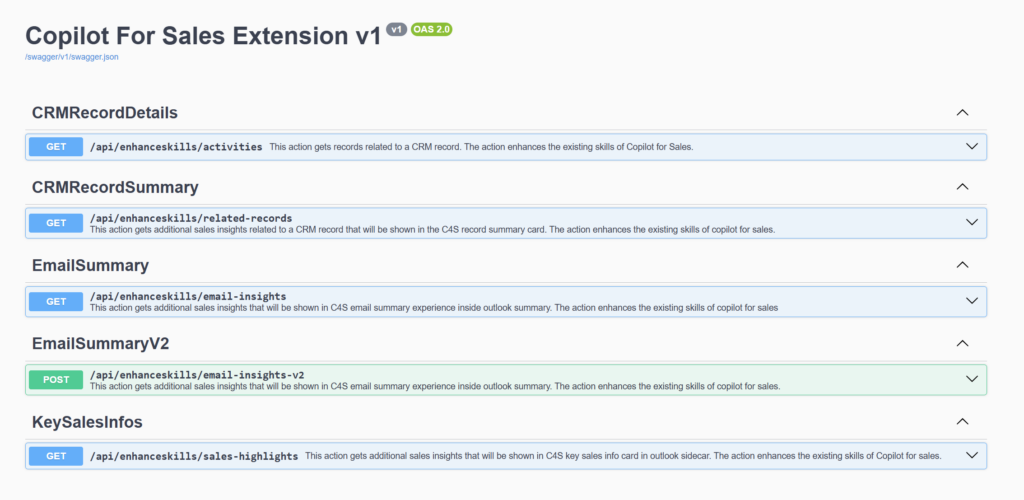
After deployment, verify the Swagger endpoint is accessible at: https://your-copilot-extension-api.azurewebsites.net/swagger
Testing Your API
Before connecting to Copilot for Sales, test your API independently using the Swagger UI or tools like Postman:
GET https://your-api.azurewebsites.net/api/enhanceskills/related-records
    ?recordType=opportunity
    &recordId=123e4567-e89b-12d3-a456-426614174000
    &top=10
    &skip=0
    &crmType=Dynamics%20365
    &crmOrgUrl=contoso.crm.dynamics.com
Verify the response matches the expected structure before proceeding to Step 2.
Pro Tip: Use the
.httpfile in the project (CopilotExtension.Custom.http) to quickly test your endpoints directly from VS Code with the REST Client extension.
Step 2: Creating the Power Platform Custom Connector
Even though we decorated our API with OpenAPI attributes and XML comments, we still need to create a custom connector manually. Why? Because the exact names and descriptions of inputs, outputs, and actions are critical for Copilot for Sales to discover and trigger your extensions correctly.
The safest approach is to create a fresh connector and directly edit the Swagger definition by copying Microsoft’s sample specification. This guarantees compliance with Copilot for Sales expectations—no guessing, no debugging why your action isn’t being triggered.
Perfect! Now I can see your final Swagger definition. Let me revise Step 2 to be more precise and include reference to your actual configuration:
Step 2: Creating the Power Platform Custom Connector
Even though we decorated our API with OpenAPI attributes and XML comments, we still need to create a custom connector manually. Why? Because the exact names and descriptions of inputs, outputs, and actions are critical for Copilot for Sales to discover and trigger your extensions correctly.
The safest approach is to create a fresh connector and directly edit the Swagger definition by copying Microsoft’s sample specification. This guarantees compliance with Copilot for Sales expectations—no guessing, no debugging why your action isn’t being triggered.
Step-by-Step: Creating the Custom Connector
Navigate to make.powerapps.com, select your environment, your solution and go to New → Automation → Custom connectors. Give your connector a meaningful name (e.g., “Custom Copilot For Sales Extension”).
On the General tab:
- Give your connector a meaningful name (e.g., “Custom Copilot For Sales Extension”).
- Upload an icon that represents your extension
- Set the icon background color
- Add a description (e.g., “This is a sample connector to extend Copilot for Sales.”)
- Set the Host to your Azure App Service URL
- Set the Base URL to
/
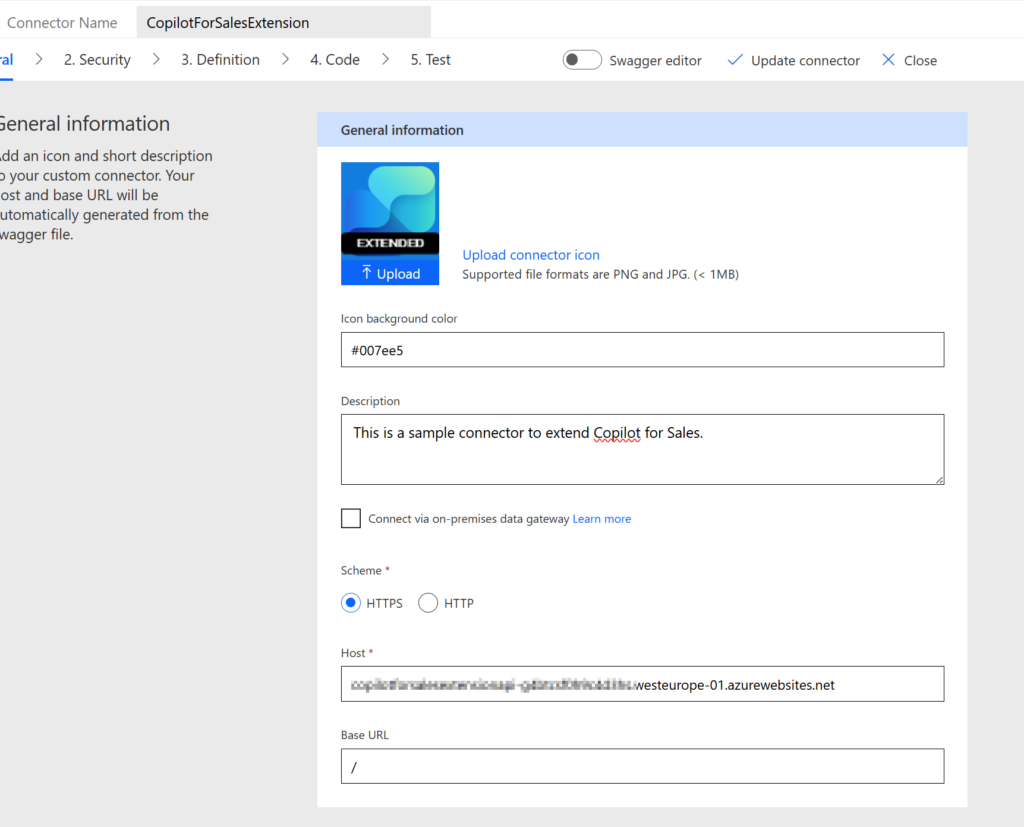
Toggle the Swagger Editor to reveal the raw OpenAPI definition—this is where you’ll paste your customized specification. – and replace the content with your Swagger definition. The key elements to verify:
swagger: '2.0'
info:
  title: Custom Copilot For Sales Extension
  description: This is a sample connector to extend Copilot for Sales.
  version: '1.0'
host: your-api.azurewebsites.net  # ← Update this to your API host
basePath: /
schemes:
  - https
Your Swagger should include the extension points you’ve implemented. Each one has a specific operationId that Copilot for Sales recognizes:
| Extension Point | Path | Operation Id | Summary |
| Record Details | /api/enhanceskills/related-records | scp-get-related-records | Enrich CRM record details |
| Record Summary | /api/enhanceskills/activities | scp-get-related-activities | Enrich CRM record summary |
| Key Sales Info | /api/enhanceskills/sales-highlights | scp-get-sales-highlights | Enrich key sales info |
operationIdvalues (prefixed withscp-) and the descriptions are what Copilot for Sales uses to understand your extensions. Don’t modify these unless you know exactly what you’re doing.
Microsoft’s sample Swagger contains all possible extension points. If you haven’t implemented all of them, remove the paths you don’t need to avoid confusion. Only keep the endpoints your API actually supports.
On the Security tab, configure authentication if your API requires it. For this PoC, we’re leaving it with no authentication (securityDefinitions: {}).
On the Test tab:
- Create a new connection
- Select an action to test (e.g., “Enrich CRM record details”)
- Fill in sample parameters:
recordType:accountrecordId:123e4567-e89b-12d3-a456-426614174000top:2skip:2crmType:Dynamics365crmOrgUrl:myorg.crm4.dynamics.com
- Click Test operation
Verify you get a 200 OK response with the expected JSON structure.
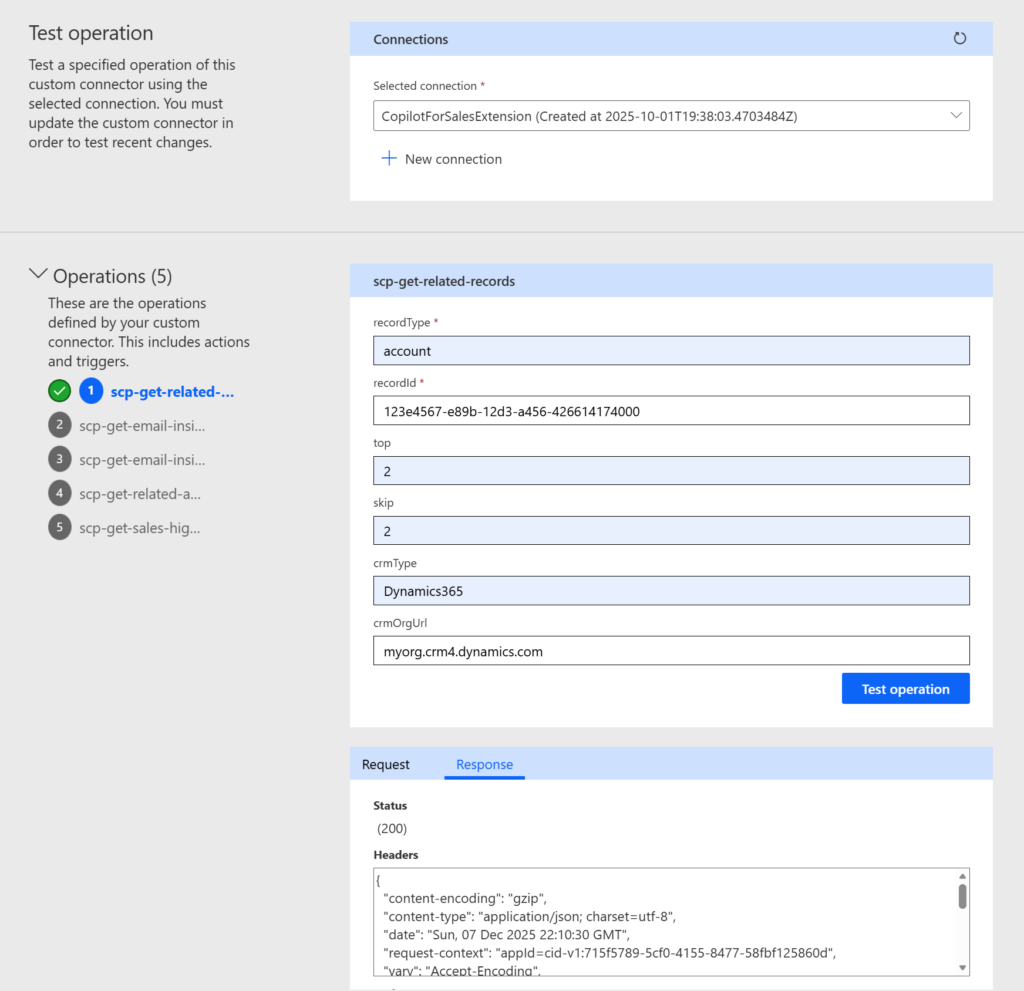
Once testing passes, click Create connector. Your connector is now ready to be added to Copilot for Sales in Copilot Studio.
Common Pitfalls
- Wrong host URL: Forgetting to update the
hostfrom Microsoft’s sample to your own API - Keeping unused paths: Remove extension points you haven’t implemented
- Modified operationIds: The
scp-prefixed operation IDs are recognized by Copilot for Sales—don’t change them - Missing definitions: Every
$refin your paths must have a corresponding entry indefinitions - HTTP method mismatch: Note that most endpoints use
GET, but Email Summary V2 usesPOST
Step 3: Adding Actions to Copilot for Sales Agent
Now that our API is deployed and our custom connector is ready, it’s time to connect everything to Copilot for Sales through Copilot Studio. This is where your extensions become available to sellers in Outlook and Teams.
Go to copilotstudio.microsoft.com and ensure you’ve selected the correct environment—the same one where you created your custom connector. In Copilot Studio, locate and open the Copilot for Sales agent. This is the pre-built agent that Microsoft provides, which we’ll extend with our custom actions.
Within the Copilot for Sales agent, navigate to the section where you can add tools (connectors). Add your custom connector—the one we created in Step 2.
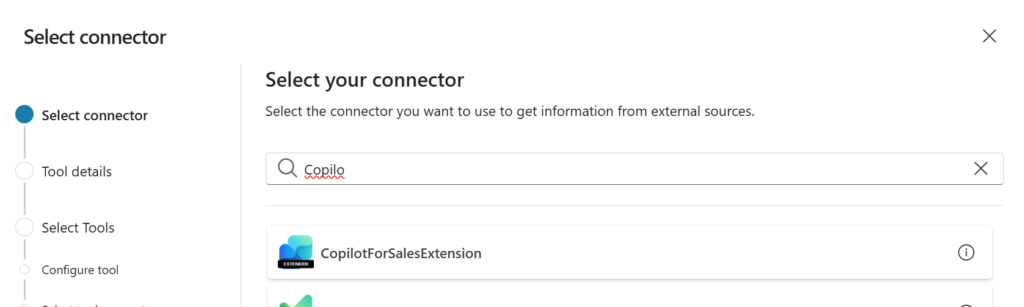
For each action in your connector, you’ll need to add it to the agent. As you add each action, verify that:
- The action name matches what you defined in the Swagger
- The description is accurate—this is what Copilot uses to decide when to trigger your extension
- The parameters are correctly mapped
- The response schema is properly configured
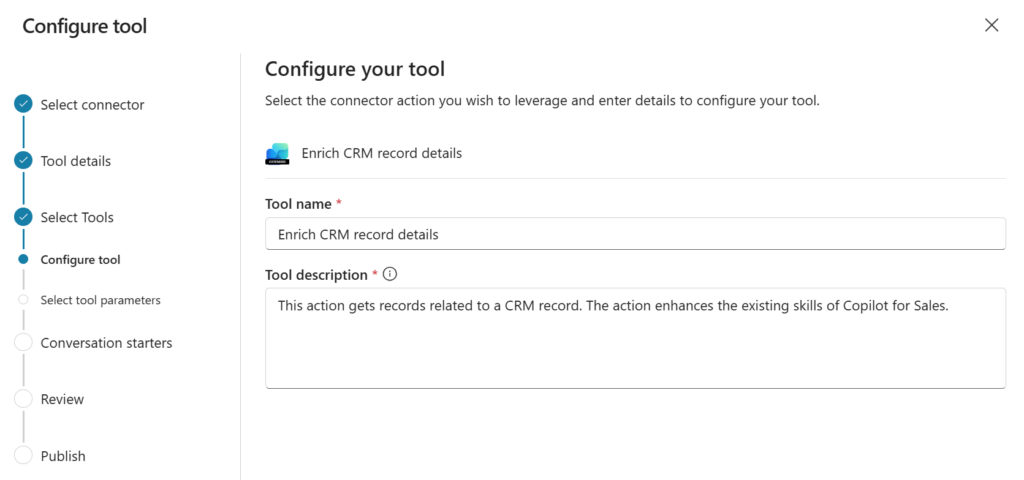
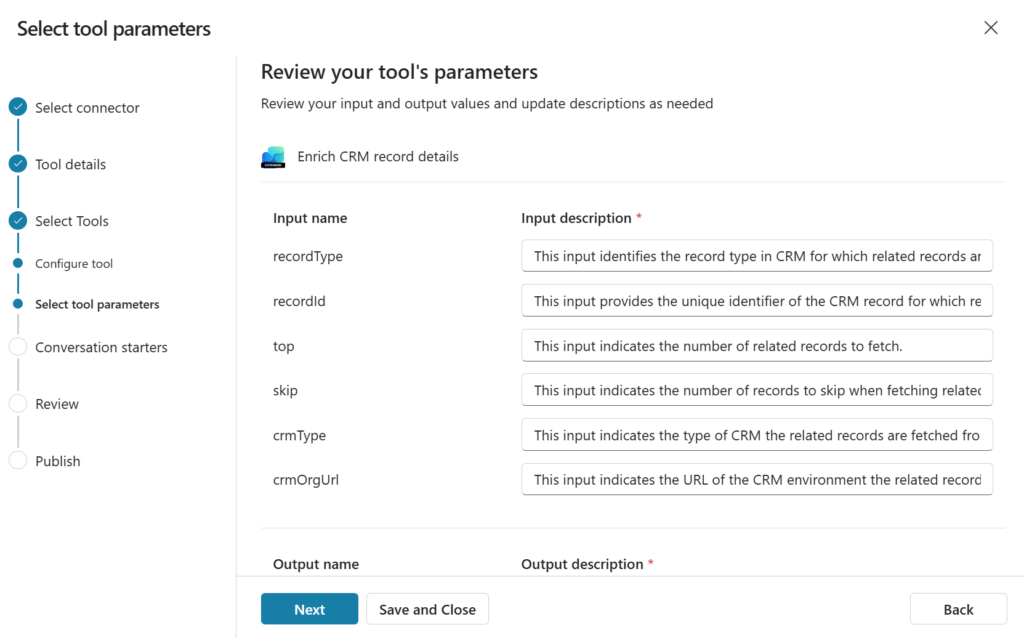
The actions you’ll be adding correspond to the extension points we implemented as part of our API.
Once all actions are configured, save your changes and publish the agent. This makes your extensions available to users.
After publishing, you need to enable the connector and define who can use it. Go to Manage and enable your plugins by providing access to it. You have several options:
- Security group or Specific users — Enable for a specific Entra Id security group (ideal for pilot groups) or for selected individuals (great for initial testing)
- Entire organization — Enable for all users
- Copilot Admins only — Restrict to administrators
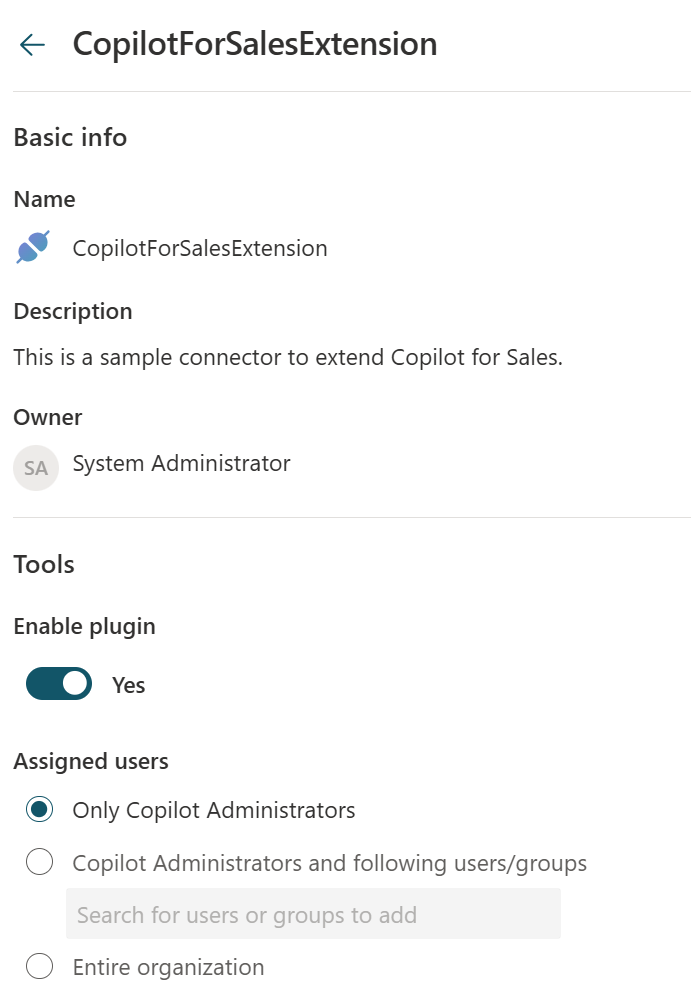
For initial testing, I recommend starting with a small group or just yourself before rolling out to the entire organization.
Note: As mentioned in the Maker’s Tips earlier, changes may take up to 12 hours to be reflected in Copilot for Sales experiences. Be patient during your first deployment!
Open Outlook and navigate to an email thread with a contact that exists in your CRM—ideally one linked to both an Account and an Opportunity. Then open the Copilot for Sales side pane and verify that:
- Your custom insights appear in the record summary
- Related records from your extension show in the record details
- The key sales info card displays your additional data
If you found this guide helpful, I’d love to hear what extensions you’re planning to build—drop a comment below or connect with me to share your Copilot for Sales journey.
The post Extending Copilot for Sales with Copilot Studio — A Practical Guide to Custom Extensions appeared first on Allan Insights.